California IX Masonic Division Archives

Ben E. King’s “Stand By Me” Montage by “Peace Through Music”

Below is a clip from the award-winning documentary, "Playing For Change: Peace Through Music", comes the first of many "songs around the world" being released independently. Featured is a cover of the Ben E. King classic by musicians around the world adding their part to the song as it travelled the globe. This and other songs such as "One Love" will be released as digital downloads soon; followed by the film soundtrack and DVD early next year.

Sign up at www.playingforchange.com for updates and exclusive content available only to those who...

Join the Movement to help build schools, connect students, and inspire communities in need through music

Contributed by John Gamache of SW Hackett #574.

What Do the Four Cardinal Virtues Have To Do With the Perfect Points of Entrance?

Exploring ritual meaning.

by Steve Laurvick

For me memorization of the ritual comes faster with comprehension and so I will post my first Trestleboard article on research I've done into the part of the ritual I'm currently struggling to understand.

In the lecture of the first degree we are taught that the perfect points of entrance are illustrated by the four cardinal virtues. We are not told why, or even whether the perfect points of entrance are into the candidate, the lodge, the fraternity or something else.

However the lectures of Temperance, Fortitude, Prudence and Justice all allude to the necessity of remembering to remain alert and wary of any physical weakening of the mind or body which might cause a man to lapse in the maintaining of his obligation.

Though I am no expert in it, I do not see this correlation spoken of or elaborated upon anywhere else in the ritual. If anyone else has please make me aware of it.

As I recall from catechism classes these virtues were first exemplified by the ancient Greeks and first written down by the philosopher Socrates student Plato.

The obvious virtue of pursuing temperance, fortitude, prudence and justice in one's daily life was passed by Roman roads to all corners of what was to become the Holy Roman Empire and was perpetuated in Western society by influential writings of intellectuals of the early Catholic church such as St. Augustine and St. Thomas Aquinas.

The word cardinal is derived from the Latin word for "hinge" or "cardin." In fact every Pope now comes from the ranks of the "Cardinals" and there is little doubt of the symbolism and importance that these virtues represent in the Christian world.

A metaphor for these four virtues: Temperance, Fortitude, Prudence, and Justice; is that they are the hinges upon which the door morality is hung, and swings.

This thread brings us back to another quite obvious reference to first admission, and a specific passage of scripture that started with a request and resulted in entry into the ancient and honorable fraternity.

So on this point I will lean toward the perfect points of entrance being related to the granting of admission. Perhaps the cardinal virtues illustrate the only possible way to enter and progress in freemasonry.

An ability to maintain the sanctity of the obligation being the "nails" in "il cardino" or the hinges of the door upon which the four cardinal virtues open or close might be a way to envision the perfect points of entrance.

The guttural, pectoral, manual and pedal as illustrated by signs and words, symbols and steps are meant only for individuals with the ability or desire to control their base impulses and strive to live a just, temperate, and prudent lifestyle while having the fortitude to live by the courage of their convictions.

Agree or not, these thoughts will I hope stimulate discussion and will help me get through this proficiency.

Mideastern Brotherhood and Freemasonry

Right Worshipful Brother Leon Zeldis will be giving a lecture in San Diego in November. Born in Chile and living in Israel RWB Zeldis is a man with something to say about brotherhood . This lecture is free and open to the general public.

  • Initiated in “América” Lodge No. 86, Santiago, Chile in 1959
  • Moved to Israel in 1962.
  • Founder of “La Fraternidad Lodge No. 62 in Tel Aviv (first Spanish speaking Lodge in Israel)
  • Working in AASR
  • Held various offices in the Grand Lodge of Israel
  • Became Honorary Assistant Grand Master of the State of Israel in 1995
  • Joined Scottish Rite in 1969. Sovereign Grand Inspector General, 33E in 1991
  • Grand Secretary General 1993-1995
  • Sovereign Grand Commander 1996-1998
  • Fellow of The Philalethes Society
  • Contributing member of the Scottish Rite Research Society
  • Has served in various offices in the Royal Arch Grand Chapter of Israel.
  • Scholar and published author.
  • Founder Member, Chair of Philosophical and Masonic Studies “Dr. René Garcia Vanenzuela,” Universidad La República, Santiago, Chile
  • Honorary Consul of Chile in Tel Aviv since 1963
  • Member of MENSA International.

Right Worshipful Leon Zeldis

Right Worshipful Brother Zeldis will talk on Arabs and Jews

in Israeli Freemasonry:


Saturday, November 17, 2007
10:00 AM

For location please inquire below.

Masonic Symbol of Square, Compass & the Letter “G”


Incoming Master Ronald Detzer Introduces Himself

(As the incoming Master of our lodge) please allow me to present my biography for your information.

I was born at Denver, CO. My father, Bro. Jordan E. Detzer (recently deceased), and both my paternal and maternal grandfathers were masons. As my father received his Doctorate in Theology and was an ordained minister in the Methodist Church, our family consisting of my mother, Jeanne, and three brothers, David (deceased May 2006, Jordan and Mark, moved every four years to a different Church in the southwestern area of the USA (Phoenix, Barstow, Lemon Grove, etc.). While living in Lemon Grove, I received the highest award in Boy Scouts, the Eagle Scout award. In 1966 I spent the entire summer teaching the first aid merit badge and life guarding at Camp Cherry Valley on Catalina Island.

I graduated with a B.A. Degree from the University of Arizona at Tucson. For six years, during the summer months, I was employed in the southern Arizona Catalina Mountains by the U. S. Forest service as a firefighter. During 1971-72 I backpacked about Europe, Morocco and Greece. I met my future bride, Anne Campbell, while she was completing her Masters Degree in Library Science at UA.

I graduated from USUI, California Western School of Law with a Juris Doctors Degree. Anne and I were wed at Torrey Pines State Reserve. Our son, Adam Campbell Detzer, also an Eagle Scout, recently graduated from the University of California at Davis.

I have practiced law in San Diego County for more than 30 years. My area of expertise is probate, wills, trusts and conservatorships. My office is located at 8264 University Ave. in La Mesa. I serve the Continuing Education of the state Bar association as an instructor to other attorneys an conservtorship law. I am a member of the superior Court’s Probate Mediation Panel. The California Department of Corrections utilizes my services as an Administrative Law Judge at Donovan State Prison. For the past 17 years I have been an active member of the Board of Directors of the National City Boys and Girls Clubs. I served 16 years on National City’s Planning Commission. My interests include travel, hiking, backpacking (section hiking the pacific Crest Trail), fly fishing, being married to Anne, being Adam’s Dad, and working to make our world a place where our children’s children will live and prosper.

Fraternally,

Ronald J. Detzer, SW

Trestelboard Link

What's going on in the lodge this month along with contact information for all officers and calander of events.

Click Here For this months S.W. Hackett # 574 Trestleboard

James J. Achenbach, P.M. S.W. Hackett Lodge #574

We thank Brother James J. Achenbach for sharing excerpts from his masonic education presentations at S.W. Hackett Lodge #574.

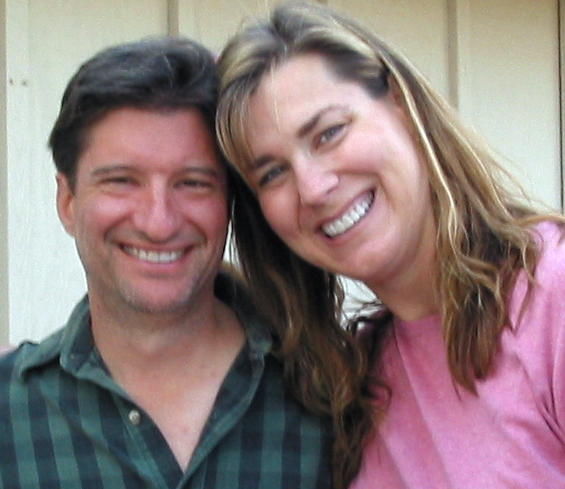
Jim was born and raised in San Diego, California. He and his wife, Lisa, recently celebrated their 14th wedding anniversary and have two beautiful children, Thomas and Anna.

Bro. Achenbach attended Crawford High School and gained valuable experience in the printing industry. After running a printing press for a few years he enrolled in classes at Mesa College and then transferred to San Diego State University. He earned his Bachelor of Arts Degree in Communicative Disorders in 1993 and his Master of Arts in Communicative Disorders with an emphasis in Speech and Language Pathology in 1995.

Bro. Achenbach has worked for the San Diego Unified School District since his graduation from SDSU. His duties as a Speech and Language Pathologist have included working with children of all ages.

Raised to the sublime degree of Master Mason on July 22, 1997, he served as Master of the Lodge in 2006. A member of both the Scottish and York Rites, Bro. Achenbach served as High Priest of Tyre Chapter #130, Royal Arch Masons in Escondido, CA.

On December 15, 2001, following the recommendations of the California Scottish Rite Foundation’s Advisory Committee, Illustrious H. Douglas Lemons appointed Bro. Achenbach to serve as Clinic Executive Director for the California Scottish Rite Foundation. His duties have taken him to every city in the state of California that has a Speech and Language Center.

In addition to studying Masonic philosophy and history, Bro. Achenbach enjoys family days with his wife and kids, camping, hiking and traveling. His travels have taken him from the local San Diego mountains and desert to the Australian rain forest. Formal visits with the Brethren of S.W. Hackett Lodge to the United Kingdom, Mexico and the east coast of the United States have been particular highlights.

Brother James Achenback and his bride Lisa of San Diego Masonic Lodge #574

Jim & Lisa Achenbach

Click to Enlarge Photo

Masonic Education

Contribution from James Achenbach October 5,2007

In 1727, Benjamin Franklin convinced 12 of his friends to form a club dedicated to mutual improvement. Meeting one night a week, these young men discussed the topics of the day. The group lasted for 40 years and eventually became the nucleus of the American Philosophical Society.

Franklin himself described the Junto in his autobiography this way; “I should have mentioned before, that, in the autumn of the preceding year, [1727] I had formed most of my ingenious acquaintance into a club of mutual improvement, which we called the JUNTO; we met on Friday evenings. The rules that I drew up required that every member, in his turn, should produce one or more queries on any point of Morals, Politics, or Natural Philosophy [physics], to be discuss'd by the company; and once in three months produce and read an essay of his own writing, on any subject he pleased. Our debates were to be under the direction of a president, and to be conducted in the sincere spirit of inquiry after truth, without fondness for dispute or desire of victory; and to prevent warmth, all expressions of positive opinions, or direct contradiction, were after some time made contraband, and prohibited under small pecuniary penalties.”

The meetings were organized around a series of questions that Ben devised, covering a range of intellectual, personal, business, and community topics. These questions were used as a springboard for discussion and community action.


The questions are as follows:

1. Have you met with any thing in the author you last read, remarkable, or suitable to be communicated to the Junto? particularly in history, morality, poetry, physics, travels, mechanic arts, or other parts of knowledge?

2. What new story have you lately heard agreeable for telling in conversation?

3. Hath any citizen in your knowledge failed in his business lately, and what have you heard of the cause?

4. Have you lately heard of any citizen’s thriving well, and by what means?

5. Have you lately heard how any present rich man, here or elsewhere, got his estate?

6. Do you know of any fellow citizen, who has lately done a worthy action, deserving praise and imitation? or who has committed an error proper for us to be warned against and avoid?

7. What unhappy effects of intemperance have you lately observed or heard? of imprudence? of passion? or of any other vice or folly?

8. What happy effects of temperance? of prudence? of moderation? or of any other virtue?

9. Have you or any of your acquaintance been lately sick or wounded? If so, what remedies were used, and what were their effects?

10. Who do you know that are shortly going [on] voyages or journies, if one should have occasion to send by them?

11. Do you think of any thing at present, in which the Junto may be serviceable to mankind? to their country, to their friends, or to themselves?

12. Hath any deserving stranger arrived in town since last meeting, that you heard of? and what have you heard or observed of his character or merits? and whether think you, it lies in the power of the Junto to oblige him, or encourage him as he deserves?

13. Do you know of any deserving young beginner lately set up, whom it lies in the power of the Junto any way to encourage?

14. Have you lately observed any defect in the laws of your country, of which it would be proper to move the legislature an amendment? Or do you know of any beneficial law that is wanting?

15. Have you lately observed any encroachment on the just liberties of the people?

16. Hath any body attacked your reputation lately? and what can the Junto do towards securing it?

17. Is there any man whose friendship you want, and which the Junto, or any of them, can procure for you?

18. Have you lately heard any member’s character attacked, and how have you defended it?

19. Hath any man injured you, from whom it is in the power of the Junto to procure redress?

20. In what manner can the Junto, or any of them, assist you in any of your honourable designs?

21. Have you any weighty affair in hand, in which you think the advice of the Junto may be of service?

22. What benefits have you lately received from any man not present?

23. Is there any difficulty in matters of opinion, of justice, and injustice, which you would gladly have discussed at this time? 24. Do you see any thing amiss in the present customs or proceedings of the Junto, which might be amended?

The results of the original Junto are still evident today as an integral part of American society. The Junto gave us our first library, volunteer fire departments, the first public hospital, police departments, paved streets and the University of Pennsylvania. They recommended books, shopkeepers, and friends to each other. They fostered self-improvement through discussions on topics related to philosophy, morals, economics, and politics.

The outgrowth mentioned earlier, the American Philosophical Society, was created in 1743 to "promote useful knowledge in the colonies." Franklin proposed that the group be comprised of "ingenious men"—a physician, a mathematician, a geographer, a natural philosopher, a botanist, a chemist, and a "mechanician" (engineer)—who lived throughout the colonies. The purpose of the group was to facilitate the sharing of information about discoveries being made in the various fields.  A respected intellectual institution, the American Philosophical Society still exists more than 200 years later.

Would a Junto society work today?  Michael Stetz, staff writer for the UT had an article in the Monday, October 1, 2007 paper titled “Dishing out the latest dirt on...Voltaire?”  This article detailed the meetings of the P&R, a discussion group that discusses the two things you’re not supposed to talk about in polite company, Politics and Religion.  The creator of the group noted that the mostly middle-aged men meet not to argue but to think outside of their comfort zones.

Perhaps the questions isn’t would a Junto work today, but rather, where are groups such as these and are they asking the right questions?